A carry-on earns its price when it makes the whole trip easier: getting out the door, crossing a terminal, finding a place for it in a small room, and coming home again. A low empty weight is useful. It is not the entire purchase decision.
Our starting point is simple: choose the lightest bag that meets your actual packing needs, feels manageable when loaded, and comes with repair terms you understand. Paying more can be reasonable for a feature you will use. Paying for a promise you cannot verify is harder to justify.
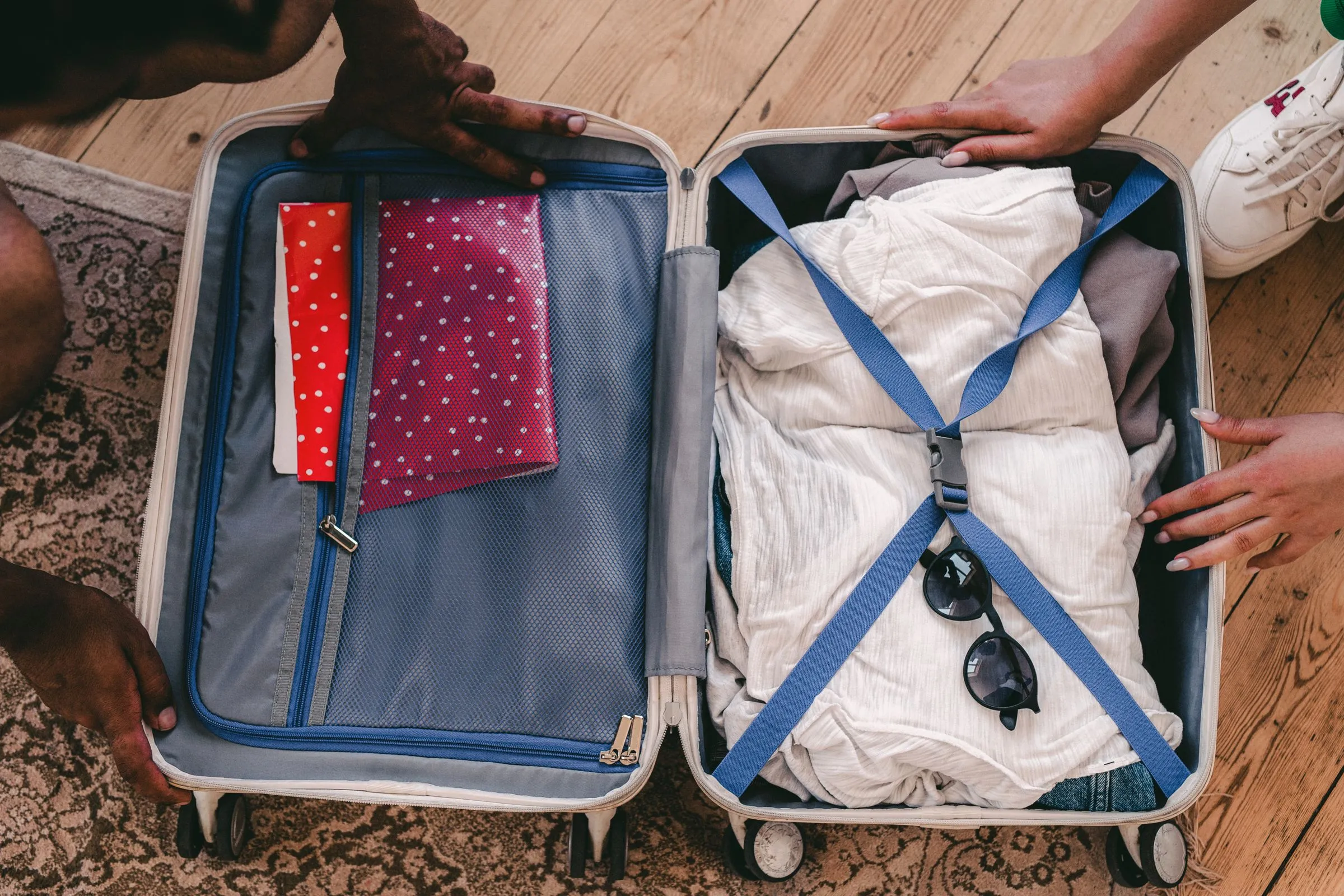
This is a research-based buying guide, not a hands-on luggage test. The photograph is illustrative; the pictured suitcase is not a product recommendation.
Begin with your flights, not the suitcase label
“Carry-on” is a product description, not a universal guarantee of cabin acceptance. Check the airline operating each flight, including a partner airline on a connecting itinerary. Use the airline’s own baggage page rather than the retailer’s summary.
For a concrete U.S. example, Delta’s published carry-on limits are 22 × 14 × 9 inches, including handles and wheels. Delta also describes exceptions for small regional aircraft and warns that partner airlines may have different restrictions. A compliant bag may still be checked at the gate when space is limited. These are Delta’s rules, not a rule for every airline.
Compare the bag’s overall dimensions with the relevant allowance. If the product page lists only the body of the case, ask for the measurement with its wheels and handles. Check the expanded measurement separately: a bag that fits when closed may be too large after you unzip the expansion panel.
Compare packed weight before comparing prestige
Use this uncomplicated calculation:
Packed weight = empty case + everything you put inside or attach to it.
As an illustrative calculation, a 6-pound case with 14 pounds of belongings weighs 20 pounds; an 8-pound case with the same belongings weighs 22. Those are examples, not measurements of particular products.
The useful question is whether the difference matters on your trip. Will you carry the bag upstairs? Transfer between trains? Lift it into a car? A beautiful case that becomes unpleasant to handle when full is a poor match, however impressive its specifications.
Before removing tags, check the return rules. If permitted, pack the case at home with the things you normally take. Try the handle at a natural height, walk with it indoors, and check whether it stays balanced when you stop. Do not attempt an overhead lift that feels unsafe, or count on someone else being available to do it.
Pay for the details you can inspect
| Detail | Question to ask before buying |
|---|---|
| Handles | Can you grip the carry handle comfortably without scraping your fingers? |
| Wheels | Does the loaded bag change direction without feeling awkward? Can damaged wheels be replaced? |
| Interior | Can your usual items fit without forcing the closure? Do organizers help or consume space you need? |
| Opening | Can you unpack it in the sort of room you book, including a small room with limited floor space? |
| Repair | Who handles the repair, what is excluded, and who pays to ship the case? |
“Lifetime warranty” deserves a close read. It is a starting point for questions, not proof that every kind of damage will be covered at no cost. Save the policy that applies to the exact model and seller. Do the same with the return policy, particularly if you are buying during a promotion.
When spending more makes sense
We would give extra weight to a comfortable handle, a layout you actually prefer, and a credible route to repairs. We would give less weight to an accessory that duplicates something you already own or makes the case harder to use.
Frequent travelers may reasonably prioritize service and replaceable parts. An occasional traveler may get more value from a simpler case that stores easily. Someone who dislikes lifting cabin luggage may prefer checking a bag, despite the extra time or applicable fee. Carry-on-only travel is an option, not an achievement you need to pursue.
Before buying, write down three requirements and one deal-breaker. That small list is often more useful than another page of star ratings. For clothing that works within the space you have, see our linen versus cotton guide; for days spent exploring on foot, start with walking-shoe fit.
Source and terms checked November 2, 2026. Airline rules and retailer policies can change; confirm them for your booking and purchase. No affiliate links or sponsored placement appear in this guide.