Choose linen when you like the character of the particular garment—including the way it creases. Choose cotton when the piece in front of you gives you the finish, shape, and care routine you prefer. There is no useful rule that every linen item is a better summer purchase, or that cotton automatically means easy care.
The label tells you what a garment contains. Trying it on, examining it, and reading the care instructions tell you much more about whether you will reach for it.
Fiber is only the beginning
Linen comes from the flax plant, as CottonWorks’ textile encyclopedia explains. Cotton and linen are different fibers, but shoppers do not buy fibers in isolation. You buy fabric shaped into a shirt, dress, or pair of trousers, sometimes with a lining, finishing treatment, or blend of other materials.
A loose shirt and a close-fitting, lined dress can feel very different even when the fiber label is similar. That is why we would not decide between two garments on “100% linen” and “100% cotton” alone. Compare pieces intended for the same job first.
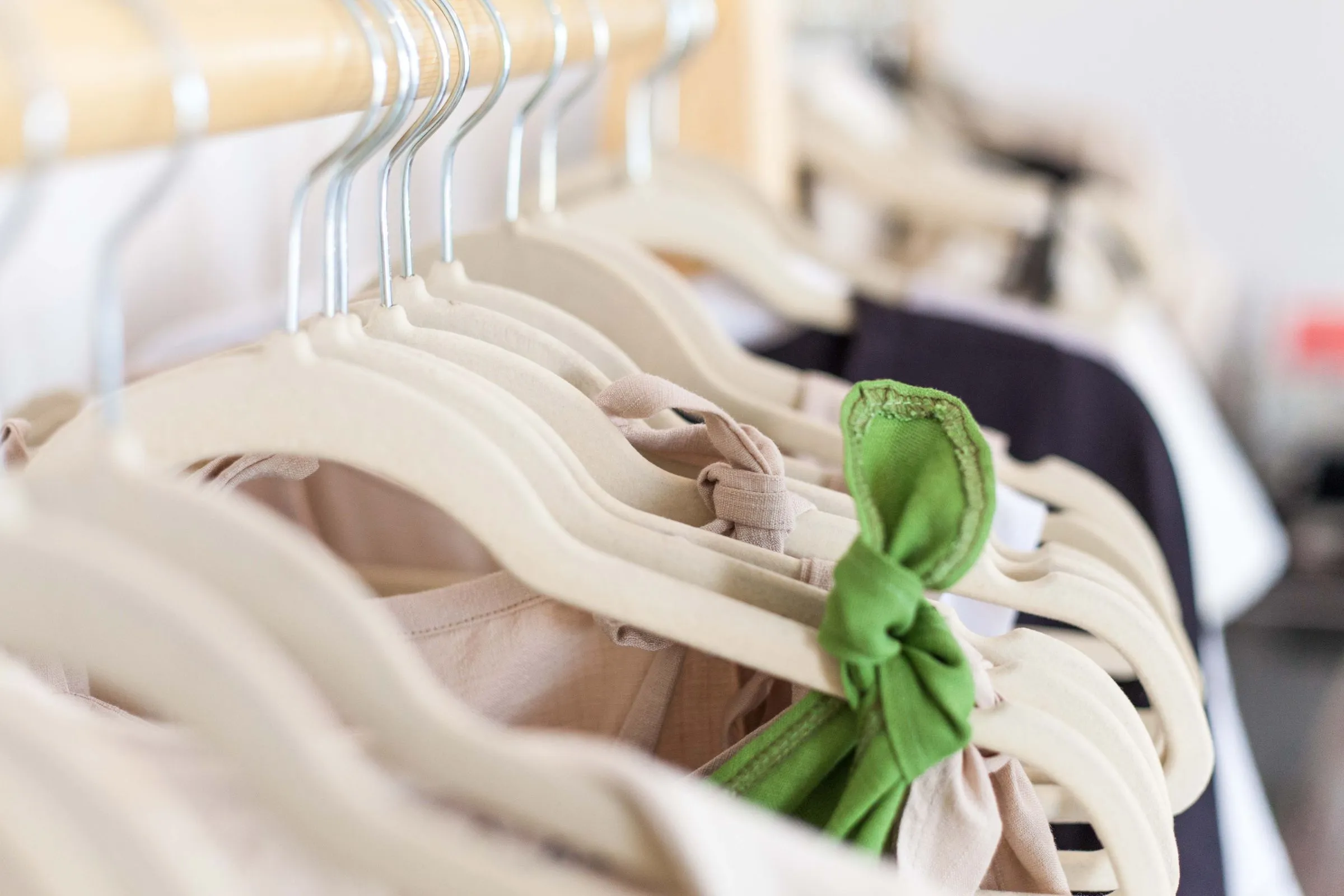
This is a research-based shopping guide. We have not lab-tested fabrics or wear-tested the garments shown in the photograph. The photo illustrates a clothing rail; it does not establish the pictured garments’ fiber content.
Give the garment a real fitting-room appointment
Start with the ordinary movements you need it to accommodate. Sit down in the trousers. Reach forward in the shirt. Check a dress while seated as well as standing. Look at where the fabric pulls and where it hangs freely. A photograph of a still model cannot answer those questions for your body.
For pale clothing, look at the garment in more than one light if the store allows it. Check pockets, seams, and any lining. Decide whether you would happily wear it with the undergarments you already own, or whether buying it creates another purchase you do not particularly want.
Then ask whether you like its texture now. “It will probably become the garment I wanted” is a weak reason to overlook an uncomfortable seam or a fit you are already negotiating with.
Put appearance and care on the same page
| What you want | A useful shopping check |
|---|---|
| A relaxed everyday shirt | Decide whether the naturally rumpled look suits the way you dress. |
| A polished work or dinner outfit | Ask what pressing or steaming the look will require; read the care label. |
| A travel piece | Consider drying and pressing arrangements at your destination, rather than choosing by fiber reputation. |
| An opaque summer trouser | Inspect the actual fabric and lining in light; do not rely on product photography alone. |
| A wardrobe staple | Try it with the shoes, layers, and colors it needs to work with. |
There is nothing wrong with enjoying freshly pressed clothes. There is equally nothing wrong with declining a garment because you do not want another pressing job. The important point is to buy for the routine you have, not the routine a beautifully styled photograph suggests.
Read the care label on that exact item. Do not transfer washing advice from another linen shirt or cotton dress. Different construction and finishing can call for different care.
Read blends without prejudice
A blend is not automatically a compromise, and a single-fiber label is not a certificate of superior construction. Ask what the blend means for the finished item you are considering. Does it have the drape you want? Does it recover its shape to your satisfaction? Is the care practical?
The FTC’s textile guidance explains how fiber content is disclosed. Use the percentages rather than a vague marketing phrase when comparing items. This is a way to read the label, not a promise that one blend will outlast another.
Buy the piece, not the summer fantasy
Our preference is for a garment that passes three tests: it feels right in movement, works with clothes you already wear, and has care requirements you accept. If two pieces pass, appearance and personal pleasure are perfectly reasonable deciding factors. Wise buying does not require choosing the least expensive one.
For travel, build the clothing plan before deciding how much luggage you need. Our lightweight carry-on guide starts with that practical relationship. At home, percale versus sateen offers another example of why construction and personal preference deserve attention alongside a fiber label.
Sources checked November 2, 2026. No affiliate links or sponsored placement. CottonWorks is an industry resource; its fiber definition is used here, not a commercial endorsement.