Comfortable flats should feel like shoes you can get on with your day in, not a compromise you have to manage. The right pair combines a shape you enjoy wearing with a fit that remains secure as you move. A flat sole alone tells you very little about that experience.
Begin with the occasion. Shoes for a short dinner outing and shoes for several hours of sightseeing are different purchases, even if both look elegant with the same trousers. Decide which job this pair needs to do before comparing styles.
Give your feet a proper fitting
The American Podiatric Medical Association’s shoe-selection guidance emphasizes fit over the number printed inside the shoe and notes that size can vary by brand. Its advice also recognizes that the two feet may differ in size. These are useful starting points; they do not identify a universally comfortable flat.
Try both shoes with the socks, hosiery, or inserts you intend to wear. Check the retailer’s conditions before doing a longer indoor trial. Stand, walk, turn, and sit. A shoe can look excellent while you are standing still and feel quite different when the heel begins slipping with each step.
Pay attention to pressure at the toes and the edge across the front of the foot. Do not rely on a sales promise that an uncomfortable pair will eventually become your favorite. If you use prescribed orthotics or have a foot condition, ask your podiatrist about appropriate footwear rather than assuming a different insole will solve the fit.
Compare the whole shoe
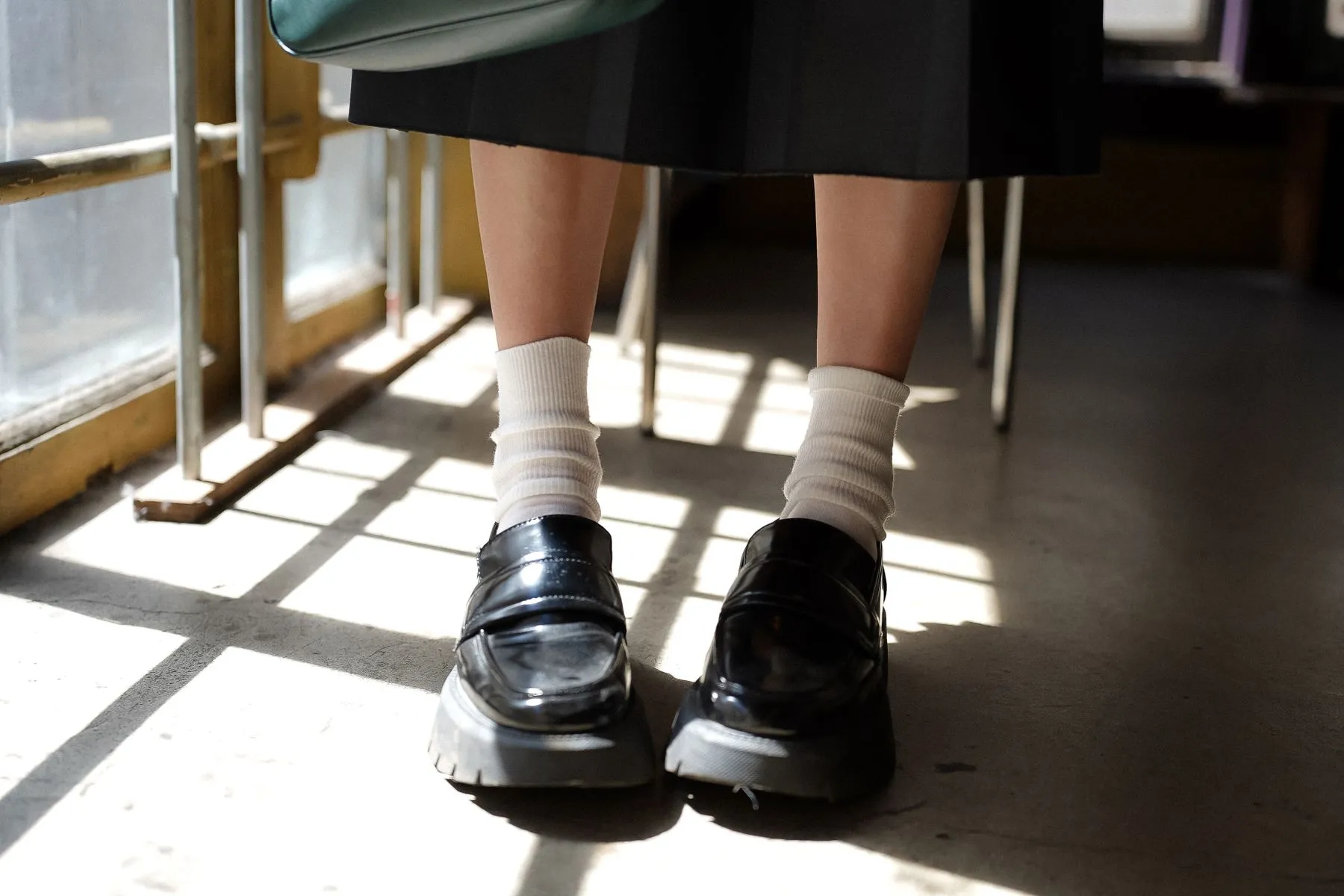
There is more than one route to a polished flat. A loafer, a strap-fastened style, and a ballet-inspired shoe hold the foot differently. Let your own trial decide which works rather than treating one silhouette as an age rule.
Look at how you put the shoe on, how securely it stays in place, and whether fastening it feels easy. If an adjustable strap is the feature that makes a pair work, that is useful design—not something to apologize for.
Ask the seller about the sole, lining, care instructions, and repair options. A soft lining is pleasant, but it does not compensate for the wrong shape. A thick-looking sole is not proof of all-day comfort. We have not performed wear, slip-resistance, or durability testing on specific flats.
Try them with your real wardrobe
Bring the hemline into the decision. The pair that looks right with a cropped trouser may feel visually heavy with another outfit. Use clothes you already own, rather than imagining a new wardrobe to justify the shoes.
Color matters most when it makes the pair easy to reach for. A neutral you dislike wearing is less versatile in practice than a color that works with several favorite outfits. Consider whether the finish will suit your actual weather and how much care you want to give it.
Pay for the fit you can verify
Before paying a premium, identify the advantage: a width option that fits, an adjustable closure, a lining you prefer, or a documented repair service. Check whether that benefit applies to the exact style, not just the brand’s general reputation.
Save the packaging during an allowed trial and recheck both shoes before committing to outdoor wear. For long walks, compare the role of a dedicated walking shoe with the role of a dress flat; our walking-shoe guide covers that separate purchase.
A good-looking pair should support the day you planned. If you spend the trial thinking about how to tolerate it, keep looking. The cover photograph illustrates a style, not a pair tested or recommended by Fifty Wise.
Sources checked November 2, 2026. Research-based editorial guidance; no hands-on product testing, affiliate links, or sponsored recommendations.